How is rejection sensitivity dysphoria different from normal rejection sensitivity? – An extract from ‘Why Does Everybody Hate Me’ by Alex Partridge
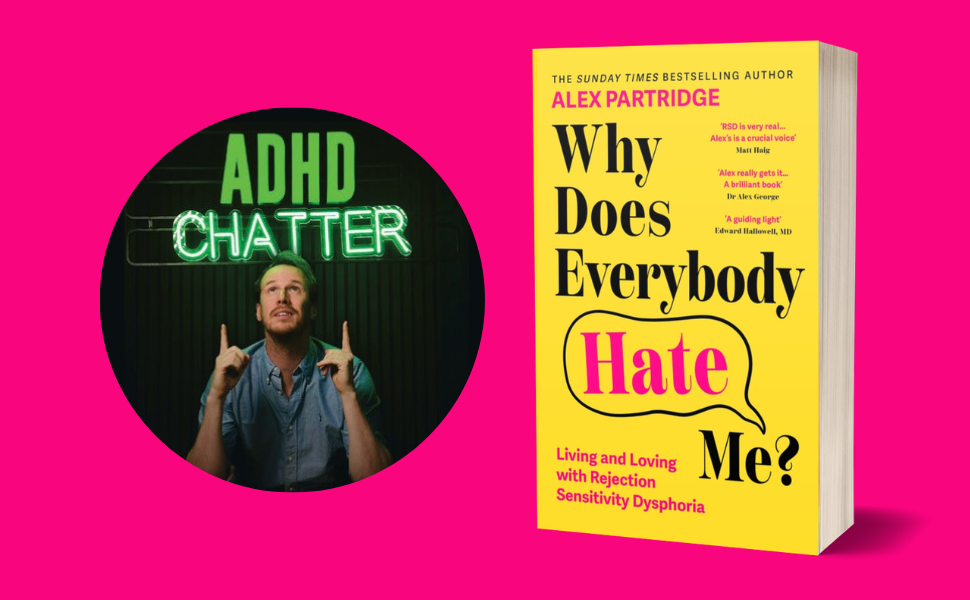
In his follow up to Sunday Times bestseller ‘Now It All Makes Sense‘, Alex Partridge shines a light on the often misunderstood aspect of ADHD – rejection sensitivity dysphoria (RSD). In the extract below, Alex answers some of the most common questions when people first learn about RSD, especially from those who are coming across RSD within ADHD for the first time.
Isn’t everyone sensitive to rejection?
Of course, nobody likes to be rejected, but there’s a difference between rejection sensitivity and rejection sensitive dysphoria.
Every human being is sensitive to rejection. After all, it’s in our DNA to want to be included in a group of other humans. When we lived in bands or clans 2.5 million years ago, sensitivity to rejection served an evolutionary purpose. Being cast out of the band would be fatal as we would no longer have the pack to protect us, so our bodies would naturally alert us to any sense of rejection, an early warning sign of imminent abandonment and subsequent death. Today, rejection isn’t fatal. Humans can survive independently, but our nervous system has not adapted to this new reality, so it still alerts us to the danger of abandonment.
It’s not nice to feel like we have been cast out.
However, a neurotypical (someone who wasn’t exposed to 20,000 extra negative comments when they were a child) is able to recognize the rejection, rationalize it, feel bad about it and then move on fairly quickly with their day. RSD is different. It’s physically painful, all-consuming and disproportionate to the event that triggered it. It feels like a bull has charged at you and headbutted you in the chest.
Another key element of RSD that separates it from general rejection sensitivity is the tremendous amount of shame that comes with it.
Normal rejection sensitivity vs rejection sensitive dysphoria
Rejection sensitive dysphoria is similar to ADHD in the sense that most people will experience the traits of both.
For example, you’d be hard pressed to find a human on this planet who has never forgotten something! However, the difference between how a neurotypical person experiences forgetfulness and how someone with ADHD experiences forgetfulness is the frequency, intensity and duration of the experience.
The same applies to separating rejection sensitivity from rejection sensitive dysphoria. A neurotypical person will feel sad or angry when rejected, but this feeling will occur only when there is a real rejection. The feeling of sadness or anger will also be proportionate to the size of the rejection. For example, being picked last for the sports team, someone breaking up with you or firing you will all trigger emotional responses because these are real rejections and part of the natural human experience.
RSD is different because someone who lives with it will experience two things:
Intense pain, both emotionally and physically, that is disproportionate to a real rejection.
Intense pain, both emotionally and physically, in the absence of a real rejection.
The second point makes life very hard because if you are triggered in the absence of a real rejection, if you perceive non-rejections as rejections, suddenly everything becomes a threat and the frequency of your pain increases significantly.
Additionally, the intensity of RSD separates it from normal rejection sensitivity. Instead of simply feeling sad or angry, RSD is all-consuming, creating feelings of absolute devastation or rage, followed by crippling embarrassment and shame.
The final difference between normal rejection sensitivity and RSD is the duration of the effect. When a neurotypical person experiences a rejection, the emotional response will be short-lived, and because their response to the rejection is proportionate, they will not ruminate over their embarrassing response to it. When someone with ADHD experiences a rejection, the emotional response can last for hours, days or even years, and can be triggered again and again if the person is reminded of the event. Even after the intense feelings of sadness or rage have passed, the mind can re-enact the encounter over and over again, each time creating more intense emotions and shame.
Normal rejection is like when someone slaps you on the back – it hurts but you are able to move on fairly quickly. RSD is like being slapped on the back when you have really painful sunburn, an immediate all-consuming, long-lasting sting; the sting then attracts a million wasps, each one landing on you, stinging you, injecting you with shame.
You shout, you scream and you get angry. You lash out at those you love. You cry. You’re unable to think about anything else other than the pain, it’s the most horrible version of hyper-focus, and it’s only when the RSD passes that you’re able to reflect and realize that nobody actually slapped you.
Why Does Everybody Hate Me? by Alex Partridge is an INSTANT NO. 1 SUNDAY TIMES BESTSELLER. You can purchase the book here. You can catch Alex on his socials here and on his podcast, ADHD Chatter, here.
Related Posts
Crisps*, crumbs and the cold shoulder: 7 things never to say to someone going through the menopause (And what to say instead)
‘Why do I feel so guilty all the time?’ – extract from ‘Guilt Free’

What you need to know about internal family systems (IFS) – 8 frequently asked questions
Fear is the Killer of Dreams: Why Twenty-Somethings Should Take Risks
Parents and Schools Together Can Change Culture